 WANLONG
The Mechanics of Multi-Stage Stone Processing
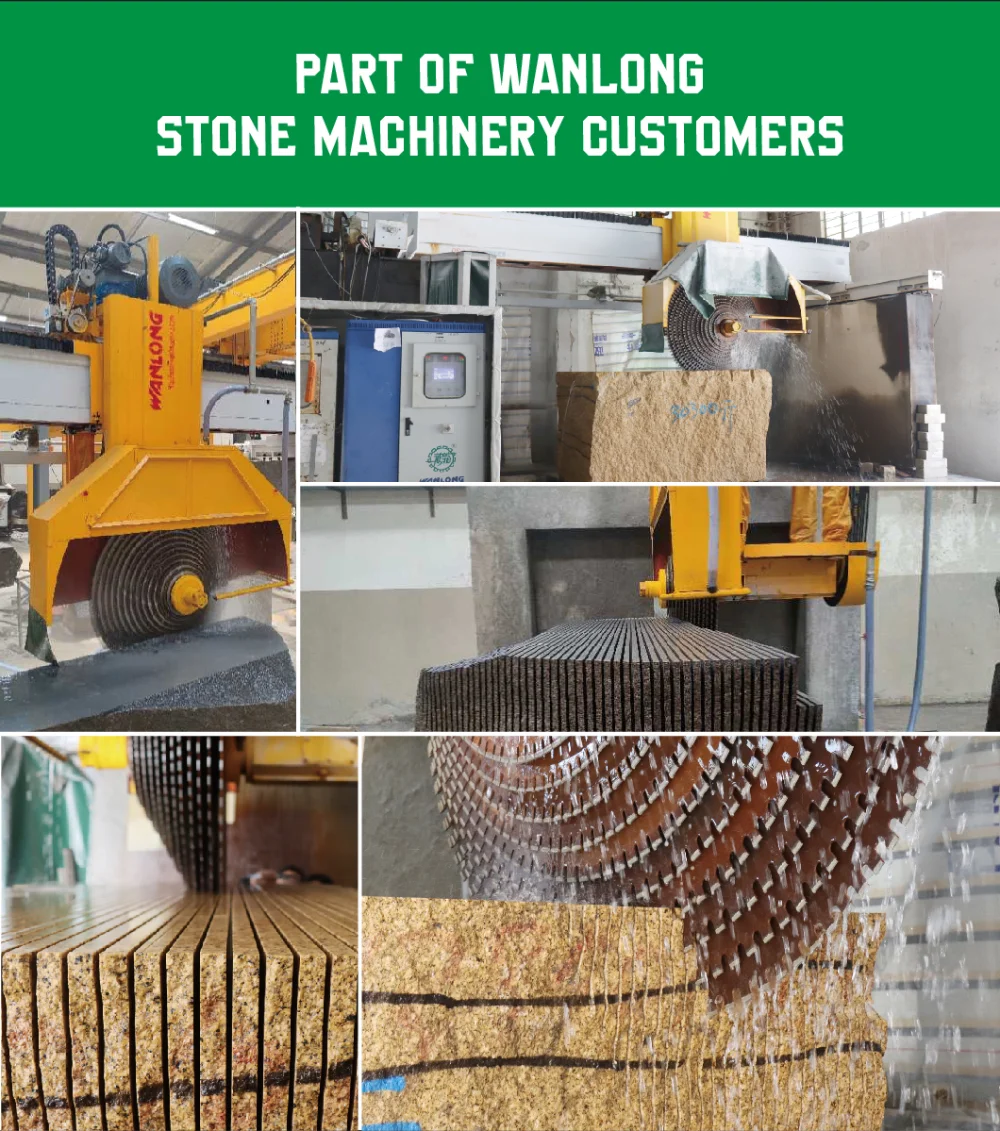
A multi-blade, multi-stage machine is far more than just a standard saw with extra attachments. It is a sophisticated, integrated system where multiple diamond-tipped blades are aligned in sequential stages. This layout allows for varying depths to be sliced into raw blocks simultaneously or in a rapid, synchronized sequence.
By bypassing the repetitive “single-pass” limitations of older equipment, these machines streamline the transition from raw quarry blocks to market-ready slabs. The result is a dramatic increase in throughput that allows facilities to scale operations without expanding their physical footprint.
Critical Engineering Components
The reliability of a cutting system is only as strong as its weakest link. For the MBM-series equipment, four key assemblies define its performance:
- High-Torque Power Train: Features an industrial-grade electric motor and precision blade-wheel shafts designed to maintain RPM even under the extreme resistance of granite or basalt.
- Synchronized Conveying Platform: A heavy-duty transport system that moves massive stone blocks through the cutting zone with millimeter-level stability, ensuring safety and quality.
- Precision Positioning Guides: These plates are fixed between blade assemblies to lock in alignment, preventing blade deflection and ensuring uniform slab thickness.
- Structural Monolith Frame: Fabricated from reinforced industrial iron to absorb the intense harmonic vibrations generated during high-speed multi-blade operation.
Table 1: Technical Performance Specifications (Model MBM-3000)
| Specification Category | Industrial Standard / Data |
|---|---|
| Motor Output Power | 37 – 55 kW |
| Blade Diameter Compatibility | Φ300 – Φ1600 mm |
| Maximum Vertical Cut Depth | 600 mm |
| Blade Configuration | 5 – 12 Unit Arrays |
| Feed Rate (Platform Speed) | 0.5 – 4.0 m/min |
| Operational Weight | 8,500 kg |
Economic Utility and Material Optimization
Modern stone processing is increasingly focused on yield maximization. Multi-blade systems excel in processing blocks smaller than 1m³, turning what was once considered “quarry waste” into high-value tiles or pavers.
Furthermore, the ability to switch between wet and dry cutting provides operational flexibility. Wet cutting utilizes water cooling to suppress dust and extend blade life, while dry cutting remains an option for specific job-site environments where water management is restricted.
Table 2: Investment Analysis – Multi-Blade vs. Single-Blade Systems
| Performance Metric | Multi-Blade Multi-Stage | Standard Single-Blade |
|---|---|---|
| Processing Throughput | High (Concurrent cuts) | Moderate (Sequential cuts) |
| Depth Versatility | Multi-level adjustment | Fixed pass depth |
| Material Yield | High (Reduced scrap) | Variable (Higher waste) |
| Cost per Finished Unit | Significantly Lower | Higher |
Industrial Material Compatibility
While often associated with granite and marble, these machines are engineered to handle a broad spectrum of construction materials:
- Natural Stones: Granite, Marble, Sandstone, and Slate.
- Pre-cast Masonry: Concrete blocks, pavers, and refractory bricks.
- Sintered Surfaces: Large-format ceramic and porcelain tiles.
Technical Outlook: The Future of Stone Fabrication
The trajectory of stone processing hardware is moving toward automated synchronization and blade-wear diagnostics. Future iterations of multi-stage systems will likely integrate real-time sensor feedback to adjust platform speed based on material hardness, further reducing mechanical fatigue. By shifting from manual oversight to precision-engineered automation, manufacturers can ensure a more sustainable production cycle that maximizes raw resource extraction while minimizing the energy cost per square meter of finished product.