 WANLONG
What Is a Sandstone Cutting Machine?
If you work with sandstone, you already know: manual tools and generic stone saws waste time, material, and money. A sandstone cutting machine is purpose-built stone extraction machinery designed specifically to cut, size, and shape sandstone blocks, slabs, and tiles with high precision and consistency.
Core Purpose of a Sandstone Cutting Machine
A sandstone cutting machine is engineered to:
- Cut sandstone blocks directly in the quarry or in the factory
- Reduce waste by making straight, accurate cuts with diamond blades
- Improve yield from each sandstone block through optimized cutting paths
- Protect workers with controlled, stable, and safer cutting operations
In simple terms, a sandstone cutting machine turns raw, irregular sandstone into usable, high-value stone products quickly and reliably.
How It Works in Quarries and Factories
In quarries, a sandstone quarry machine or sandstone chain saw:
- Cuts large blocks directly from the rock face
- Uses diamond blade sandstone saws or chains with diamond segments
- Runs on rails or tracks for straight, repeatable cuts
- Uses water cooling to control dust and blade temperature
In factories and stone shops, bridge saw sandstone machines and multi-blade stone cutters:
- Slice sandstone blocks into slabs, tiles, steps, and custom pieces
- Use automatic stone cutting machine controls for accurate dimensions
- Allow CNC programming (on advanced models) for complex shapes and profiles
Sandstone Machines vs General Stone Cutters
Not every stone saw is right for sandstone. A dedicated sandstone cutting machine stands out because it is:
- Optimized for sandstone hardness and abrasiveness
- Built with robust frames and guides to handle large sandstone blocks
- Equipped with specific diamond segments designed for sandstone’s grain structure
- Tuned for higher cutting speeds typical for softer sedimentary stones like sandstone
General stone cutters designed for very hard granite or marble often cut sandstone slower, with more wear, and generate more waste and chipping.
Main Benefits: Yield, Precision, Waste, Safety
When I invest in or recommend a sandstone cutting machine, I’m looking for four main gains:
- Higher yield
- More usable product from each sandstone block
- Fewer cracks, chips, and rejects
- Better precision
- Accurate thickness and dimensions for slabs and tiles
- Cleaner edges that reduce downstream grinding and finishing
- Lower waste
- Thinner kerf (cut width) from diamond blades and wire
- Optimized cutting patterns to maximize stone extraction
- Improved safety
- Guarded blades and emergency stops
- Controlled feed speeds and stable cutting frames
- Water and dust management to reduce silica dust exposure
Used correctly, a sandstone cutting machine is not just another piece of quarry mining equipment—it’s a profit and safety tool that directly impacts your yield, production quality, and operating costs.
Types of Sandstone Cutting Machines
When I’m helping a U.S. quarry or fab shop choose a sandstone cutting machine, I always start with the basic types. Each machine has a clear role in the workflow, from block extraction to finished slabs and tiles.
Quarry Sandstone Cutting Machine for Block Extraction
For sandstone quarries, the first step is clean, efficient block extraction.
Typical sandstone quarry machine options:
- Quarry double-blade cutter
- Two large diamond blades cut vertical and horizontal slots in the sandstone face.
- Great for consistent block sizes, less waste, and faster separation from the bench.
- Often mounted on rails/track for stable, straight cuts in large open quarries.
- Track-mounted sandstone quarry machine
- Runs on steel tracks or rails along the quarry floor.
- Ideal for long cuts and keeping alignment tight over distance.
- Reduces manual drilling and blasting
Key Features to Look for in a Sandstone Cutting Machine
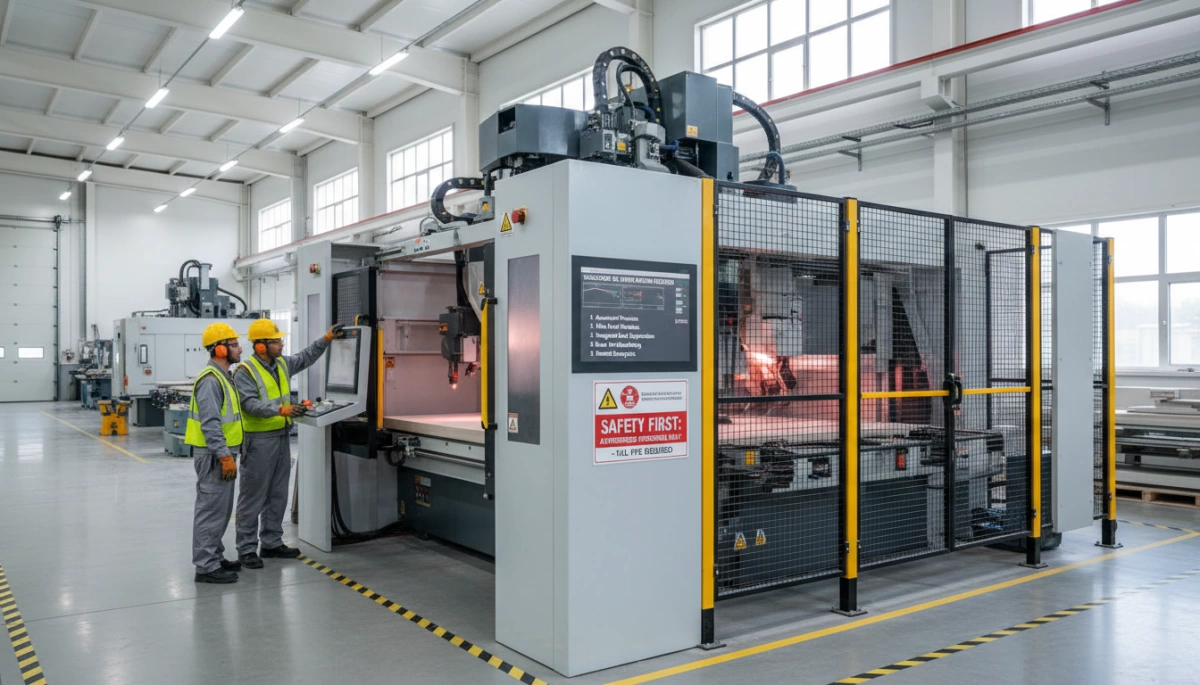
When I choose a sandstone cutting machine for US quarries or shops, I focus on a few core specs. These decide your output, finish quality, and actual profit.
Cutting Speed and Depth for Sandstone
You want a machine that matches your sandstone hardness and production goals.
Key points:
- Adjustable cutting speed for soft, medium, and hard sandstone
- Deep cutting for full-size sandstone blocks and slabs
- Stable feed rate to avoid burning, chipping, or wandering cuts
| Feature | What to Look For |
|---|---|
| Cutting speed | Variable, stable at high feed rates |
| Max cutting depth | Enough for your thickest block or slab |
| Material compatibility | Sandstone-focused, but OK for limestone, etc. |
Diamond Blade, Segments, and Durability
The diamond blade sandstone saw is the heart of the machine.
Look for:
- Blades designed specifically for sandstone abrasiveness
- Long-life segments with good cooling and chip clearance
- Easy blade change and alignment on the stone block cutter
| Blade Factor | Why It Matters |
|---|---|
| Segment type | Controls speed vs. life balance |
| Bond hardness | Must match sandstone hardness |
| Blade diameter | Limits max depth and cut stability |
Power, Torque, and Stability
For quarry sandstone cutting machines and bridge saw sandstone units, consistent torque is everything.
- High-torque motors for continuous cutting under load
- Heavy, rigid base to reduce vibration on long cuts
- Smooth rails/track on quarry double blade cutter and chain saws
| Spec | Target |
|---|---|
| Motor power | Sized to block thickness and production volume |
| Stability | Heavy frame, wide base, solid anchoring |
| Vibration | Minimized for better precision and blade life |
Automation, PLC, and Remote Control
US operations are leaning hard into automatic stone cutting machines for labor savings.
- PLC controls for stored cutting programs
- Remote operation for quarry mining equipment (safer and faster)
- Auto indexing for repetitive sandstone slab production
Build Quality and Dust Resistance
Sandstone is abrasive and dusty. The machine has to survive it.
- Thick steel frame and crossbeam on bridge saws and block cutters
- Sealed bearings and electrical cabinets
- Corrosion-resistant components around water systems
Safety Features That Actually Matter
I never skip this, especially on large sandstone quarry machines.
- Full blade guards and stable workpiece clamping
- Big, easy-to-reach emergency stop buttons
- Dust extraction or suppression options
- Safe access platforms and clear sightlines
Water Cooling, Slurry, and Environment
Sandstone cutting needs proper water and slurry control to protect workers and keep the site clean.
- Continuous water cooling to reduce blade wear and dust
- Slurry collection and manageable discharge or recycling
- Systems that comply with OSHA dust rules and local environmental regulations in the US
| Environmental Control | Benefit |
|---|---|
| Water cooling | Longer blade life, cleaner cut |
| Slurry management | Easier cleanup, less site downtime |
| Dust control | Safer workspace, regulatory compliance |
If you’re comparing sandstone cutting machine price quotes, I always line them up against these features first. That’s where the real long-term value sits, not just in the sticker price.
How to Choose the Right Sandstone Cutting Machine
Choosing the right sandstone cutting machine in the U.S. comes down to matching the machine to your actual work, not just the spec sheet.
Match the Machine to Your Operation
Quarry operations (block extraction):
- Use: sandstone quarry machine, double-blade quarry cutter, sandstone chain saw machine, diamond wire saw sandstone
- Best for: Large blocks, bench cutting, vertical + horizontal cuts, open-pit and underground sites
Factory / shop operations (slabs & tiles):
- Use: bridge saw sandstone, multi-blade stone cutter, CNC sandstone cutting machine
- Best for: Slabs, tiles, countertops, dimensional stone, precision shaping
Block Extraction vs. Slab Cutting
| Need | Best Machine Type | Notes |
|---|---|---|
| Quarry block extraction | Quarry double blade cutter, chain saw for sandstone, diamond wire saw | Focus on block size, cutting depth, track length |
| Slab & tile production | Bridge saw sandstone, multi-blade sandstone block cutter | Focus on thickness range, cutting speed, accuracy |
| Custom shapes / high precision | CNC automatic stone cutting machine | Best for U.S. fab shops doing custom work |
Size the Machine for Your Blocks and Volume
When picking a sandstone quarry machine or stone block cutter, lock in:
- Max block size you handle (length, width, height)
- Daily / monthly output targets
- Cutting depth and stroke length needed
If you’re in the U.S. doing mid-to-high volume:
- Go bigger on stroke and cutting depth than you need today
- Make sure the frame can handle continuous shifts without flexing
Balance Budget, Costs, and ROI
Don’t look at sandstone cutting machine price alone. Look at total cost per cubic foot or per slab.
Factor in:
- Upfront price (machine + install)
- Diamond blade and wire consumption
- Power use per hour
- Labor (manual vs. semi-auto vs. CNC)
- Downtime and maintenance
Higher-priced, well-built sandstone processing equipment often:
- Cuts faster
- Uses less consumables
- Pays back quicker in busy U.S. quarries and shops
Check Power, Site, and Infrastructure
Before buying, confirm your site can actually run the machine:
- Power: Voltage, phase, and amps available vs. machine requirement
- Water: Stable water supply for cooling and slurry
- Space: Enough room for tracks, movement, loading/unloading
- Access: Road access for delivery and service trucks
- Climate: Dust control and freeze protection in colder U.S. regions
Avoid Common Buying Mistakes
Typical issues I see:
- Overspec: Buying a big CNC or heavy quarry machine for low-volume work
- Underspec: Small bridge saw trying to handle large sandstone blocks
- Ignoring consumables: Cheap machine that eats blades and wires
- No service plan: No local or remote tech support in the U.S.
Quick rule:
If you’re unsure, step one size up on frame and power, and step one level down on features you won’t really use.
Work With Reliable Sandstone Machine Manufacturers
I always recommend working with proven sandstone cutting machine manufacturers that:
- Have U.S. references or installations
- Offer remote support, parts, and training
- Understand sandstone, not just granite or marble
- Provide clear data on cutting speed, blade life, and energy use
Ask for:
- Real-world production numbers from similar U.S. jobs
- Consumable cost estimates per month
- Service response times and spare parts lead times
Choosing right up front saves you years of lost production and frustration.
Top Sandstone Cutting Machine Solutions
When I look at sandstone cutting machine setups that actually perform in real U.S. quarries and fabrication shops, a few configurations stand out. The right sandstone quarry machine or sandstone block cutter isn’t about hype—it’s about steady output, clean cuts, and low downtime.
Popular Sandstone Quarry Machine Configurations
For sandstone block extraction, these setups are working well across U.S. quarries:
- Double-blade sandstone quarry machine + wire saw combo
- Double-blade unit does fast vertical and horizontal cuts on the bench.
- Diamond wire saw sandstone machine finishes large blocks and tricky angles.
- Great for high-volume sandstone block production with less waste.
- Track-mounted sandstone cutting machine systems
- Runs on steel tracks for straight, repeatable cuts.
- Cuts long faces in open-pit sandstone quarries with minimal manual work.
- Ideal where labor is tight and consistency matters.
- Chain saw for sandstone on rail or crawler base
- Strong option for medium-hard sandstone deposits.
- Cleaner kerf than traditional drilling and blasting.
- Often used where environmental or noise rules are strict.
Leading Bridge Saw Sandstone and Block Cutter Setups
In U.S. fabrication shops, a bridge saw sandstone machine is usually the heart of the line:
- Bridge saw + multi-blade stone cutter line
- Bridge saw sandstone machine handles slabs, custom pieces, and miters.
- Multi-blade sandstone block cutter slices blocks into multiple slabs in one pass.
- This combo keeps both tile and slab orders moving without bottlenecks.
- Automatic stone cutting machine with CNC controls
- CNC sandstone cutting machine handles radius cuts, sink cutouts, and patterns.
- Cuts labor hours and reduces rework on architectural sandstone jobs.
- Perfect for shops doing high-end residential and commercial work.
Strengths of Multi-Blade and Diamond Wire Sandstone Systems
If you’re pushing volume or cutting complex shapes, multi-blade and diamond wire systems pay off:
- Multi-blade sandstone block cutter
- High throughput: multiple slabs from one sandstone block.
- Tight thickness tolerances, less grinding, less waste.
- Best for flooring, cladding, and paver production.
- Diamond wire saw sandstone systems
- Flexible: works for large blocks, irregular benches, and special cuts.
- Lower noise and vibration vs. heavy mechanical cutters.
- Solid choice when you need precise stone extraction machinery without blowing up the face.
- Multi-wire sandstone cutting machine
- Parallel cutting of many slabs at once.
- Great for large factories feeding distributors and big-box retailers.
How Wanlong Sandstone Cutting Machines Fit Different Workflows
From my side as a platform owner, I look at Wanlong as a complete sandstone processing equipment ecosystem rather than one-off machines:
- For quarries
- Wanlong quarry double blade cutter and chain saw for sandstone handle primary block extraction.
- Diamond wire saw sandstone machines integrate with existing quarry mining equipment for flexible layouts.
- For factories
- Wanlong bridge saw sandstone units cover slab cutting and shaping.
- Multi-blade stone cutter systems and automatic stone cutting machines take care of high-volume tile and panel production.
- CNC sandstone cutting machine options line up well with U.S. architectural and custom shop requirements.
- For job sites and on-site work
- Portable sandstone cutting machines support restoration work, trim cuts, and adjustments without dragging everything back to the shop.
User Feedback: Performance, Reliability, and Maintenance
From U.S. customers running sandstone cutting machines every day, I keep hearing the same themes:
- Performance
- Stable cutting speed on softer and medium-hard sandstone.
- Clean edges with the right diamond blade sandstone saw segments.
- Less rework on slabs and tiles, especially with multi-blade cutters.
- Reliability
- Frames hold alignment under continuous duty.
- Controls and motors stand up well in dusty quarry environments.
- Fewer unplanned stops compared to older or generic stone cutters.
- Maintenance
- Access to wear parts is straightforward—good for quick service.
- Basic daily checks (rails, belts, water lines) are simple for operators to handle.
- With proper lubrication and blade care, operating cost per square foot stays competitive.
If you’re choosing a sandstone cutting machine for the U.S. market, I’d build around these proven setups—then size and spec the exact machine to match your sandstone deposits, output targets, and labor situation.
Sandstone Cutting Machine Price and Cost Factors
When I look at a sandstone cutting machine, I don’t just ask, “What’s the price?” I ask, “What’s the cost per usable ton or per finished square foot?” That’s what matters for most shops and quarries in the U.S.
Typical Sandstone Cutting Machine Price Ranges
Here’s what I usually see in the U.S. market for sandstone quarry machine and processing setups:
- Quarry sandstone cutting machines (double-blade, track-mounted, chain saw for sandstone):
- Entry / mid-level: $25,000 – $80,000
- Heavy-duty, continuous quarry mining equipment: $80,000 – $250,000+
- Bridge saw sandstone machines (for slabs, tiles, countertops):
- Manual / basic programmable: $15,000 – $45,000
- Fully automatic stone cutting machines: $45,000 – $120,000+
- Multi-blade stone cutter / sandstone block cutter:
- Standard block cutter: $40,000 – $150,000
- High-output multi-blade sandstone block splitting machine: $150,000 – $300,000+
- CNC sandstone cutting machine (5-axis, profiling, sink cutouts, complex work):
- Shop-level CNC: $70,000 – $180,000
- High-end production CNC systems: $180,000 – $350,000+
- Diamond wire saw sandstone machines / multi-wire systems:
- Single wire saw: $40,000 – $120,000
- Multi-wire sandstone cutting systems: $200,000 – $500,000+
These are ballpark ranges, but they’re realistic for U.S. buyers sourcing from reputable manufacturers like Wanlong and other international brands.
How Size, Automation, and Brand Change the Price
Three things drive sandstone cutting machine price more than anything:
- Machine size & capacity
- Larger cutting height, longer rails, and bigger blade diameters cost more.
- If you’re cutting big sandstone blocks (think 10–15 ft long), you’ll pay more upfront but cut fewer times.
- Automation level
- PLC controls, automatic positioning, laser alignment, and remote controls add cost.
- In the U.S., higher labor costs usually make automation pay for itself faster.
- Brand & build quality
- Premium brands (Wanlong and similar) charge more, but:
- Better frames → less vibration → less breakage and waste
- Better electronics → fewer breakdowns in dusty quarry environments
- Better support → faster uptime when something goes wrong
- Premium brands (Wanlong and similar) charge more, but:
If a sandstone cutting machine is much cheaper than the market, it usually means compromises on steel, electrics, safety, or support. That’s where U.S. buyers get burned.
Hidden Costs Most Buyers Forget
When I run numbers with U.S. customers, I always add these into the sandstone cutting machine cost:
- Installation & setup
- Foundation, anchoring, electrical hookup, and calibration
- Can add 5–15% to the project cost
- Training
- Operator training, safety training, and programming (for CNC / PLC systems)
- Often the difference between profit and broken blades
- Consumables
- Diamond blade sandstone saw segments, diamond wire, filters, lubrication
- Water and slurry management (pumps, tanks, filters, disposal fees)
- Spare parts
- Rails, bearings, belts, sensors, limit switches, motors
- Smart move: stock critical parts for quarry sandstone cutting machines
Cheap machines with high consumable use or weak parts end up being more expensive per cut than higher-end sandstone processing equipment.
Calculating Long-Term Value and Payback
To make a smart call, I look at cost per unit of output, not just sticker price. A simple way to think about ROI:
- Higher-end machine that:
- Cuts faster
- Uses less diamond
- Produces more usable slabs / blocks
- Needs less labor
- Has less downtime
→ Usually pays back in 1–3 years in an active U.S. quarry or fabrication shop.
Ask yourself:
- How many blocks or slabs per day do I need to hit my numbers?
- How much yield loss can I tolerate?
- What’s my local labor cost per shift?
- What’s my blade and wire cost per month?
If the sandstone cutting machine lets you add one more truckload a week or one more kitchen a day, it’s often worth stepping up a tier.
When to Invest in Higher-End Sandstone Processing Equipment
I recommend investing in higher-end sandstone quarry machines or bridge saw sandstone systems when:
- You’re running multiple shifts or plan to expand production.
- You’re in a competitive U.S. market where speed and consistency win jobs.
- You’re cutting medium-hard to hard sandstone where weak machines bog down.
- You need tight tolerances for architectural stone or high-end residential work.
- Downtime is expensive (crews on standby, trucks waiting, contracts with penalties).
If you’re a small shop doing occasional sandstone work, a mid-range automatic stone cutting machine or a solid manual bridge saw may be enough. But if sandstone is your main business, a well-built, higher-end sandstone quarry machine or CNC sandstone cutting machine usually saves money over the life of the equipment.
Bottom line: don’t chase the lowest sandstone cutting machine price. Build a setup that delivers consistent output, low waste, and controllable operating costs in real U.S. working conditions.
Maintenance and Best Practices for a Sandstone Cutting Machine
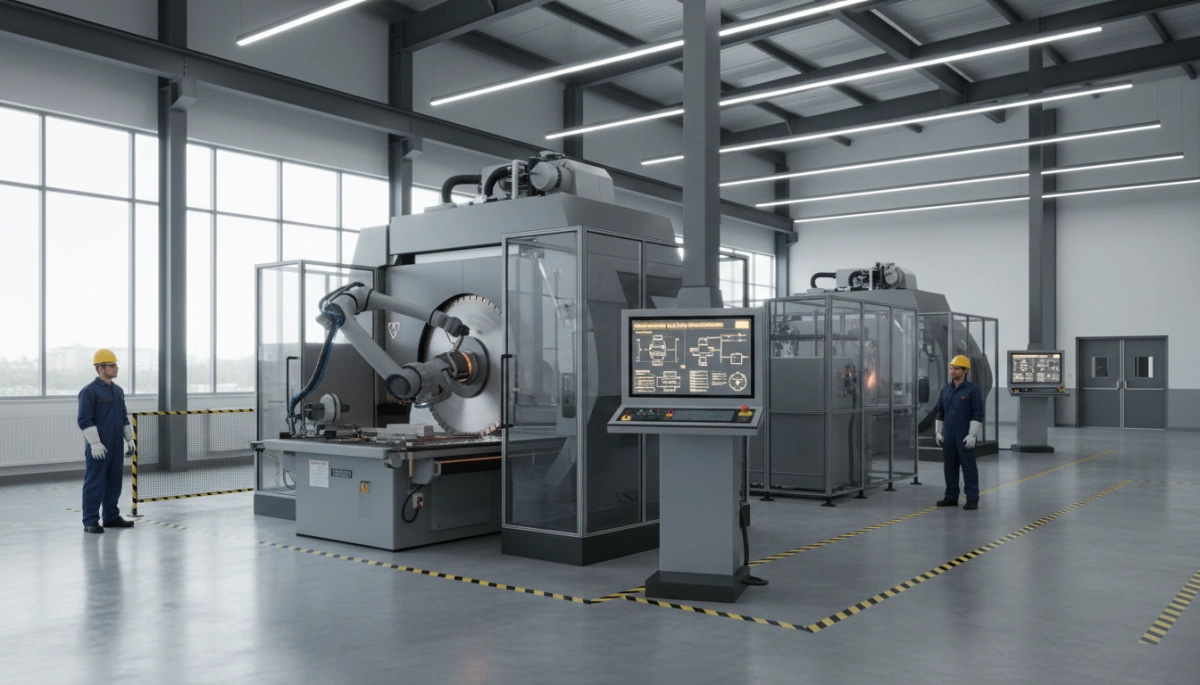
Keeping a sandstone cutting machine in top shape isn’t optional in the U.S. market—it’s what protects uptime, blade life, and operator safety. Here’s how I look at it in day‑to‑day quarry and shop use.
Daily Inspection and Cleaning
For any sandstone quarry machine, bridge saw, or stone block cutter:
- Before shift
- Check guards, emergency stops, and limit switches.
- Inspect diamond blade sandstone saw segments for cracks, missing segments, or glazing.
- Verify water flow to the blade/wire and look for leaks.
- After shift
- Rinse off slurry from rails, bearings, and covers.
- Blow or wipe dust off electrical cabinets (don’t open live panels).
- Clear mud from wheels, tracks, and work tables.
Short daily checks prevent expensive downtime on bigger quarry mining equipment.
Weekly and Monthly Checks
On heavier sandstone processing equipment, I treat weekly/monthly checks as non‑negotiable:
- Weekly
- Check alignment of bridge, rails, and vertical/horizontal beams.
- Inspect belts, chains, and couplings for wear and tension.
- Tighten loose bolts on frames, rails, and guards.
- Monthly
- Check track wear on quarry double blade cutter and chain saw for sandstone.
- Verify squareness of cuts with a straight edge and square.
- Inspect electrical connections, plugs, and conduit for damage.
If alignment drifts, you’ll see it fast in sandstone slab production with tapered or out‑of‑square cuts.
Blade Care, Sharpening, and Replacement
Diamond tooling is where your money goes, so I manage it tight:
- Match blade spec to sandstone hardness (soft vs abrasive vs quartz‑rich).
- Dress the blade regularly to keep it “open” and cutting free.
- Watch for:
- Slower cutting speed
- Burn marks or heavy chipping
- Vibration or wandering cuts
These usually mean it’s time to dress or replace.
- For multi-blade stone cutter and block cutters, replace blades in sets to keep cuts even.
The same logic applies to diamond wire saw sandstone systems—worn beads kill speed and wire life.
Lubrication, Cooling, and Dust Control
On any automatic stone cutting machine or CNC sandstone cutting machine, I stick to the OEM lube schedule:
- Lubrication
- Grease bearings, rails, and moving parts per the manual.
- Check oil levels in gearboxes and change on schedule.
- Cooling
- Maintain clean water supply to the blade/wire.
- Flush and clean filters, screens, and tanks often.
- Dust & Slurry
- Use water at the cut to control dust, especially in enclosed U.S. shops.
- Install or maintain proper slurry pits, settling tanks, or recycling systems.
Good cooling and dust control directly extend machine life and keep you OSHA‑friendly.
Troubleshooting Cut Quality and Power Issues
When a sandstone cutting machine starts acting up, I look at:
- Uneven or tapered cuts
- Check blade wear, arbor runout, and rail alignment.
- Inspect blade flanges and mounting surfaces.
- Vibration
- Inspect foundation bolts, bearings, and blade balance.
- Verify slabs or blocks are clamped solid.
- Power drops or tripping
- Check incoming power (voltage, phase, grounding).
- Look for overload from dull blades or too aggressive feed rates.
Solve the mechanical or electrical issue first—don’t just slow the feed and hope for the best.
Operator Training for Safe, Efficient Sandstone Cutting
Well‑trained operators are the cheapest “upgrade” you can buy:
- Train on:
- Proper start‑up/shut‑down sequences
- Correct feed rates for your horizontal vertical cutting machine
- Safe handling of blocks and slabs
- Enforce PPE: eye, hearing, dust protection, and proper footwear.
- Standardize checklists for daily
Latest Trends in Sandstone Cutting Machine Technology
Automation and Smart Controls
On modern sandstone cutting machines, automation isn’t a luxury anymore, it’s the baseline.
- PLC and CNC controls let operators in the U.S. store cutting programs for repeat sandstone slab and block jobs.
- Auto feed and auto height adjustment keep the diamond blade in the sweet spot for cutting speed and blade life.
- Remote control pendants and touchscreens mean the operator can stay clear of slurry, noise, and dust while still running the sandstone quarry machine safely.
This kind of automation is what drives consistent quality, lower labor cost, and a safer jobsite.
IoT Monitoring and Predictive Maintenance
I’m seeing more sandstone cutting machines ship with built‑in connectivity for quarry and fabrication shops here in the States.
- IoT sensors track spindle load, vibration, oil temp, and water flow on bridge saw sandstone machines, diamond wire saw sandstone systems, and multi‑blade stone cutters.
- Data feeds into a dashboard so you can schedule maintenance before a breakdown, not after.
- Fleet owners running multiple quarry sandstone machines can compare uptime, fuel/power use, and blade wear across locations.
That’s how you squeeze more hours out of your equipment and avoid surprise downtime.
Eco‑Friendly Sandstone Cutting: Water and Energy
U.S. customers are under more pressure on environmental rules, so sandstone processing equipment has to help you stay ahead:
- Closed‑loop water systems recycle cutting water from bridge saws and multi‑blade cutters, cutting fresh water use and discharge.
- Variable frequency drives (VFDs) reduce energy spikes when starting and stopping large motors on quarry double blade cutters and horizontal vertical cutting machines.
- Better slurry management (settling tanks, filters) keeps quarry sites cleaner and reduces haul‑off costs.
You end up with lower operating costs and an easier time meeting local regulations.
Hybrid Horizontal and Vertical Sandstone Cuts
Hybrid sandstone quarry machines are getting more popular as operators push for more yield per block:
- Horizontal + vertical cutting in one machine lets you square blocks and pre‑shape them without multiple setups.
- Combined systems can work with diamond wire, chain saw for sandstone, or double‑blade heads, depending on your geology.
- For U.S. dimensional stone quarries, that means tighter nesting, less waste, and cleaner stone block cutter output ready for bridge saw sandstone lines.
This is especially useful where quarry faces are irregular and access is tight.
Future Developments in Sandstone Processing Equipment
Looking forward, here’s where sandstone cutting machine technology is heading:
- Smarter automatic stone cutting machines that adjust feed speed and blade pressure in real time based on stone hardness.
- More AI‑assisted nesting and path planning for multi‑wire and multi‑blade stone cutters to squeeze every inch of usable sandstone from each block.
- Lighter, more portable sandstone cutting machines for on‑site restoration and architectural work, especially in historic U.S. downtowns.
- Deeper integration between quarry mining equipment and factory sandstone slab production, so data flows from stone extraction machinery all the way to the finished sandstone tile.
The goal is simple: higher yield, lower cost per square foot, and less risk across the entire sandstone supply chain.
FAQs About Sandstone Cutting Machines
Best machine for sandstone quarry block extraction
For quarry block extraction in sandstone, I usually recommend:
- Double-blade sandstone quarry machine on rails for fast, straight horizontal and vertical cuts.
- Sandstone chain saw machine when you need clean cuts in medium-hard sandstone and tight quarry spaces.
- Diamond wire saw sandstone systems when block size is large, the geology is irregular, or you want high recovery with less waste.
If you’re in the U.S. running an open-pit sandstone quarry, a quarry double blade cutter + diamond wire saw combo covers most production needs.
Typical cost of a professional sandstone cutting machine
Sandstone cutting machine price depends a lot on size and automation, but in general:
- Quarry sandstone cutting machine (double-blade, track-mounted): usually in the $40,000–$150,000 range.
- Bridge saw sandstone machines for slabs: around $25,000–$90,000 depending on CNC and table size.
- Multi-blade sandstone block cutter: about $60,000–$200,000 for high-volume lines.
- CNC sandstone cutting machine: often $50,000–$180,000 with advanced controls.
In the U.S., I always factor in: freight, customs (if imported), installation, training, and spare parts to get the real project cost.
Using sandstone cutting machines on limestone and similar stones
Most sandstone cutting machines and diamond blade sandstone saws can also cut:
- Limestone
- Travertine
- Soft to medium sedimentary stones
What I watch closely:
- Use the right diamond blade segments tuned for that stone hardness.
- Adjust cutting speed, feed rate, and water flow so you don’t burn the blade or chip the edges.
For mixed U.S. operations (sandstone + limestone), a versatile automatic stone cutting machine with variable speed and multiple blade options works best.
Basic maintenance requirements and service intervals
To keep a sandstone quarry machine or bridge saw running clean and reliable:
- Daily
- Check bolts, guards, water flow, and emergency stops
- Clean rails, sensors, and work area dust/slurry
- Weekly
- Inspect belts, bearings, and guides for wear
- Check blade wear and segment condition
- Monthly
- Verify alignment and squareness of cuts
- Inspect electrical connections and lubrication points
For heavy U.S. quarry use, I like a service check every 6–12 months by a trained tech to catch problems before downtime hits.
Why choose brands like Wanlong for sandstone cutting equipment
I work with Wanlong sandstone cutting machines because they hit the balance most U.S. buyers want:
- Proven quarry mining equipment: stable double-blade cutters, diamond wire saws, and chain saws for sandstone.
- High-value bridge saw sandstone and multi-blade stone cutter lines: solid frames, accurate cutting, good parts availability.
- Strong ROI: fast cutting, good block yield, and reasonable consumable costs.
- Support + parts: easy access to diamond blades, wires, and spare parts, plus remote support and training.
If you’re running sandstone slab production or quarry block extraction in the States, a Wanlong sandstone cutting machine gives you industrial performance without the over-inflated price tag of some European brands.