 WANLONG
Safety management in open-pit mining—much like in underground mining—demands constant vigilance, particularly when utilizing diamond wire saw machines for extraction operations. In open-pit mining environments, the effective elimination of potential hazards, the prevention of production-related safety accidents, and the minimization of casualties and property damage constitute a critical mission within the field of mining safety—one that demands our utmost attention.
Investigations reveal that current open-pit mining operations harbor numerous potential safety hazards, manifested primarily in the following specific areas:
1. In certain areas, the slope gradients at excavation faces are excessively steep; furthermore, in specific localized sections, dangerous overhanging rock masses or protruding rock ledges are present.
2. At some operational sites, safety warning devices have not been installed in accordance with regulations, nor have designated blasting shelters (bunkers) been established.
3. At more than half of the operational sites surveyed, the necessary stripping and clearing of loose overburden from the tops of excavation faces has not been carried out as required.
4. Certain operational zones suffer from excessive material accumulation or waterlogging, neither of which has been properly cleared or remediated.
5. In some instances, the safety distances separating excavation faces, processing areas, residential zones, and public roadways fail to meet the requirements stipulated by relevant regulations.
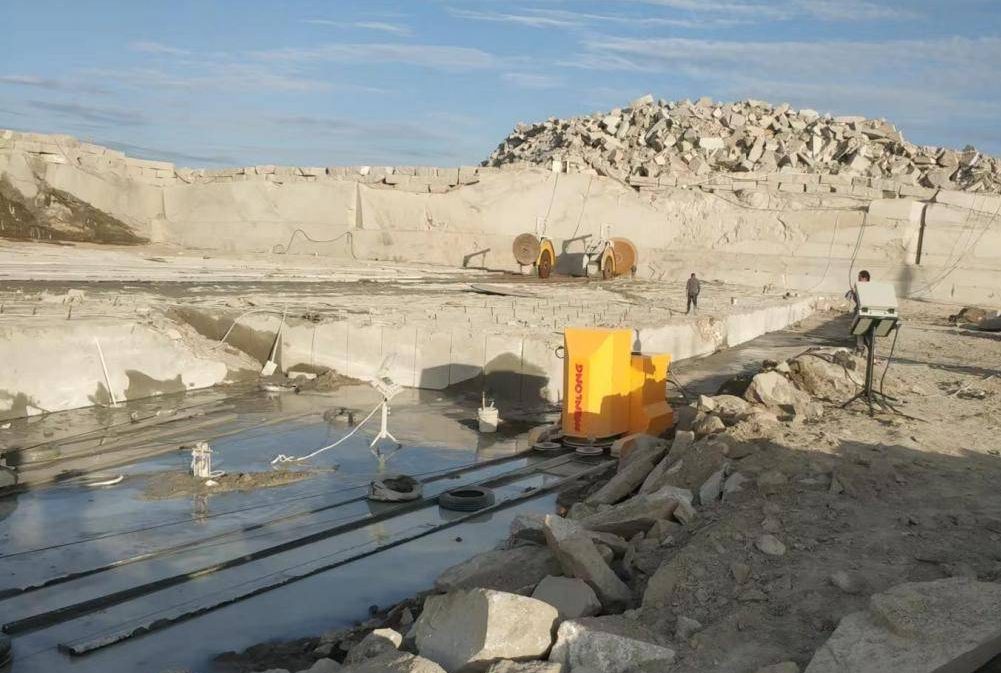
6. At various locations, loose or hazardous rock masses present at excavation faces have not been thoroughly cleared away.
7. The safety fuses utilized for blasting operations are frequently shorter than the minimum standard of 1.2 meters mandated by regulations.
8. Some electrical equipment and wiring systems are dilapidated and in a state of severe disrepair due to age; in certain cases, the routing and installation of electrical wiring do not even comply with relevant technical codes.
9. Regulatory violations—such as the unauthorized use of unlicensed equipment, the deployment of operators who have not undergone professional training, and the failure to wear safety helmets as required—are frequently observed occurrences.
10. Vehicles transporting materials are frequently subjected to severe overloading—a pervasive and widespread problem.
The existence of the aforementioned hazards poses a grave threat to the safe production and operational integrity of open-pit mining enterprises; unless these hazards are addressed through serious and timely rectification and elimination, they could trigger safety-related production accidents at any moment.