 WANLONG
Diamond grinding wheels are made with diamond abrasives and different bonding materials, including resin, ceramic, and metal. Their performance depends on the abrasive, bond system, wheel structure, and intended grinding application.
Proper storage and transportation help protect the wheel from moisture, impact, deformation, and other damage. Understanding the different types of diamond grinding wheels also makes it easier to select the right product for a particular machine or material.
How to Store Diamond Grinding Wheels
Storage conditions can affect the condition and service life of a diamond grinding wheel. Wheels should be kept in a clean, dry environment, away from excessive heat, freezing conditions, and moisture.
The following practices are recommended:
- Keep wheels dry: Avoid storage areas with high humidity or condensation. Moisture can affect certain bond systems and associated components.
- Avoid extreme temperatures: Do not store wheels in locations exposed to excessive heat or freezing conditions.
- Protect against chemical exposure: Keep wheels away from corrosive substances and incompatible chemicals, including alkaline materials where relevant.
- Follow the manufacturer’s storage period: Some products have a defined shelf life. The original guidance recommends using one year as a storage reference, but the actual permitted period depends on the wheel’s bond type and manufacturer specifications.
- Inspect older stock before use: Wheels that have exceeded their stated storage period should undergo the inspections and tests required by the manufacturer and applicable safety standards before being returned to service.
A storage period of one year should not be treated as a universal expiration date for every diamond grinding wheel.
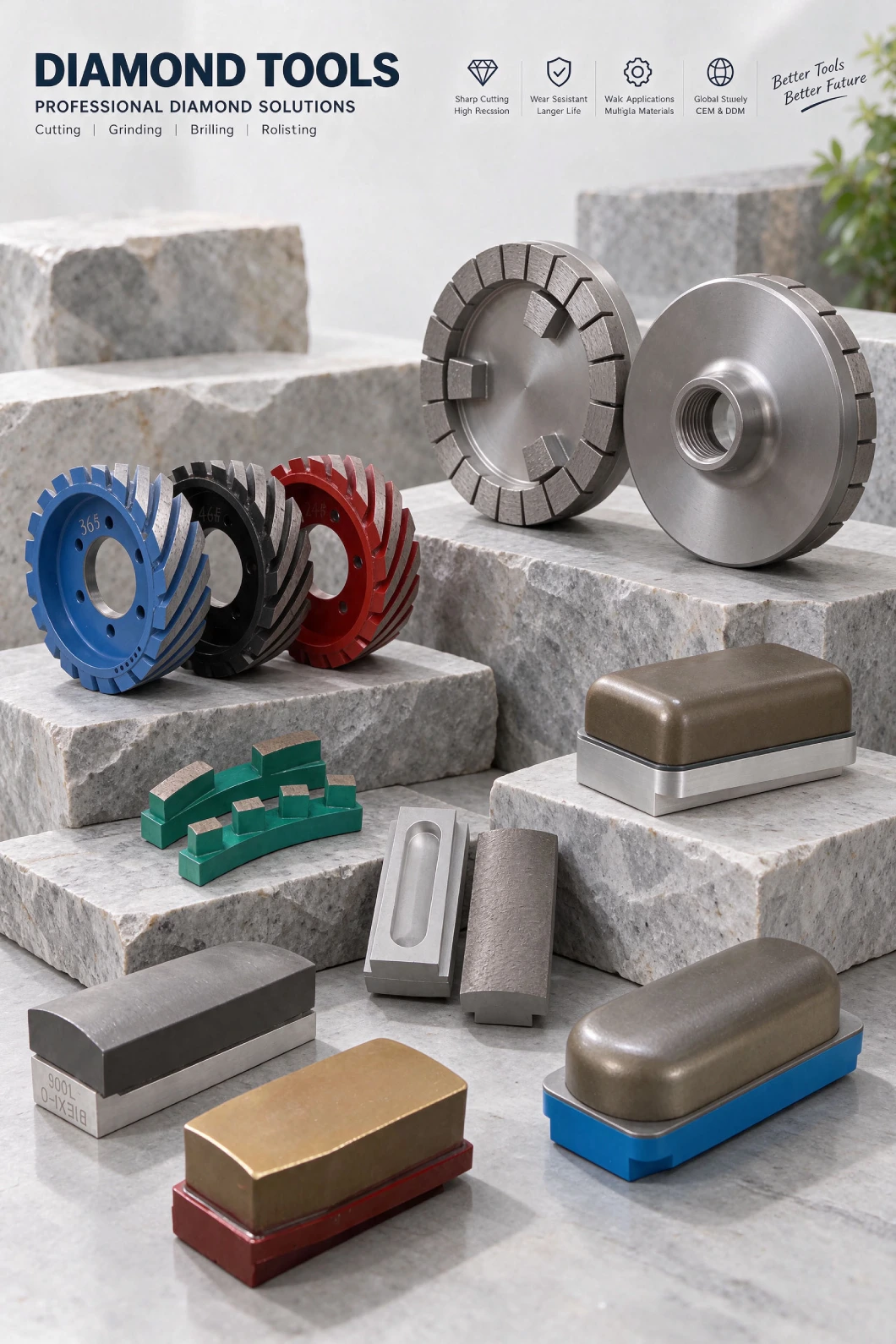
Safe Transportation and Handling
Diamond grinding wheels should be protected throughout transportation, warehouse handling, and internal movement. Even a small impact can damage the abrasive layer or wheel structure.
Keep the Original Packaging Intact
Transport wheels in suitable protective packaging. Avoid dropping, striking, or allowing them to collide with other products.
Do not leave packaged wheels exposed to rain, moisture, or other unfavorable environmental conditions for extended periods. Keep them away from chemicals that may react with the wheel or its bond.
Store Wheels Flat and Properly Supported
Where the wheel design and manufacturer’s instructions permit, place wheels flat and arrange them neatly. Avoid prolonged inclined storage or uneven loading, which may cause deformation or damage.
For warehouse storage, the original guidance recommends:
- Use a dry wooden pallet or suitable support to keep products off the floor.
- Maintain approximately 10–15 cm of clearance from the ground.
- Keep the stacking height below 1 meter.
- Avoid placing excessive weight on the wheels.
These figures are practical storage references from the original guidance. Actual stacking arrangements should account for wheel dimensions, weight, packaging, and manufacturer instructions. Some wheel designs require dedicated racks rather than flat stacking.
Use First-In, First-Out Inventory Management
Apply the first-in, first-out (FIFO) principle to warehouse inventory. Products received earlier should generally be issued first, provided they remain within their permitted storage period and pass the required inspection.
This helps prevent older stock from remaining unused for too long.
For products stored beyond their recommended period, check their appearance and perform any required strength or safety tests before use. Do not rely on visual inspection alone when a specific test is required.
Main Types of Diamond Grinding Wheels
Diamond grinding wheels can be classified in several ways. The most useful categories are based on bond type, manufacturing process, grinding application, and wheel shape.
1. Classification by Bond Type
The bond holds the diamond abrasive in place and controls how the abrasive is exposed during grinding.
| Bond Type | Main Characteristics |
|---|---|
| Resin bond | Commonly used for fine grinding, polishing, and applications requiring a relatively smooth finish |
| Vitrified bond | Uses a ceramic bond structure and is selected for applications requiring controlled abrasive exposure and wheel porosity |
| Metal bond | Offers strong abrasive retention and good wear resistance; commonly used for grinding hard and brittle materials |
| Electroplated bond | Holds diamond particles on the wheel surface through an electroplated metal layer |
| Brazed bond | Uses a metallurgical bond between the diamond abrasive and the supporting body |
Bronze-bonded diamond grinding wheels are one type of metal-bonded wheel. They are often used where a durable bond and strong diamond retention are required.
2. Classification by Manufacturing Process
Diamond grinding wheels can also be grouped according to how the abrasive layer is manufactured.
- Sintered diamond grinding wheels: Produced by consolidating diamond abrasive and bonding materials under controlled heat and pressure. Common bond systems include resin, vitrified, and metal.
- Electroplated diamond grinding wheels: Manufactured by depositing a metal coating to hold diamond particles on the working surface.
- Brazed diamond grinding wheels: Use a brazing process to bond diamond particles to the tool body.
These manufacturing methods produce different abrasive structures and bonding characteristics. The right choice depends on the material being processed, the required grinding accuracy, and operating conditions.
3. Classification by Grinding Application
Different grinding tasks require different wheel specifications and geometries.
Common application-based types include:
- Diamond wheels for tool grinding: Used for sharpening and grinding diamond tools and other cutting tools, depending on the wheel specification.
- Diamond wheels for cemented carbide: Designed for grinding tungsten carbide tools and components.
- Diamond wheels for PCD tools: Used to grind polycrystalline diamond compact (PCD) cutting tools.
- Centerless grinding wheels: Used in centerless grinding machines for processing cylindrical workpieces.
- Diamond wheels for ceramics: Suitable for grinding ceramic components and other hard, brittle materials.
- Diamond cutting wheels: Designed for cutting applications rather than conventional surface grinding.
- Diamond saw blades: Used for cutting stone, concrete, ceramics, and other materials, depending on blade design and bond formulation.
A grinding wheel should always be selected according to the workpiece material, machine type, and required processing result.
4. Classification by Wheel Shape
Wheel geometry determines how the abrasive surface contacts the workpiece and how the tool fits the machine.
Common shapes include:
- Straight wheels: Flat, parallel-sided wheels used for general grinding applications.
- Cylinder wheels: Cylindrical grinding wheels used on suitable grinding machines.
- Cup wheels: Designed for face grinding and other applications requiring a broad working surface.
- Dish wheels: Shallow, dish-shaped wheels used for specific tool-grinding and profile applications.
- Bevel or edge-grinding wheels: Designed for grinding and finishing edges.
- Grinding discs: Flat or shaped discs used for surface grinding and material removal.
The exact names and classifications may vary between manufacturers and industry markets. Always check the product drawing and dimensions when ordering a replacement wheel.
Selecting the Right Diamond Grinding Wheel
Diamond is an extremely hard abrasive, making diamond grinding wheels suitable for materials that are difficult to process with conventional abrasives. Common applications include cemented carbide, ceramics, glass, PCD, and other hard or brittle materials.
However, diamond hardness alone does not determine grinding performance. The bond type, diamond grit size, concentration, wheel shape, and operating parameters all affect cutting efficiency, surface finish, and service life.
Before selecting a wheel, consider:
- The material and hardness of the workpiece
- The grinding operation and required surface finish
- The machine type and spindle specifications
- The wheel dimensions and maximum operating speed
- The required balance between material removal rate and wheel life
Matching the wheel to the application is more important than choosing a product based on its name or appearance alone.