 WANLONG
A diamond segment is not simply a mixture of diamond particles and metal powder. Its cutting performance depends on how well the metal matrix supports the diamond grains throughout the working life of the tool.
During manufacture, diamond abrasives and metal bonding powders are consolidated under controlled temperature and pressure. The resulting sintered segment provides the structure that holds the diamonds in place while the tool cuts through stone. The matrix also affects how quickly new diamond grains become exposed, how heat moves through the segment, and how cutting forces are distributed.
Getting the matrix formulation right is therefore just as important as selecting suitable diamond abrasives.
Holding the Diamonds in Place Is Only the Beginning
Diamond grains must remain securely embedded in the matrix while the segment is subjected to repeated impacts, friction, and cutting loads. If the bond is too weak, grains may pull out before they have contributed enough cutting work, wasting abrasive material and shortening the segment’s service life.
The matrix helps retain each grain through a combination of mechanical support and interfacial bonding. Its composition and sintering conditions influence how effectively the metal surrounds the diamond particles and how securely the grains are anchored.
Uniform diamond distribution matters, too. During powder preparation and mixing, the abrasive particles need to be dispersed throughout the matrix rather than clustered in certain areas. Uneven distribution can lead to inconsistent cutting behavior and localized wear.
This is why both powder mixing and sintering control matter in diamond segment production. A strong bond cannot fully compensate for poor abrasive distribution or an unsuitable matrix formulation.
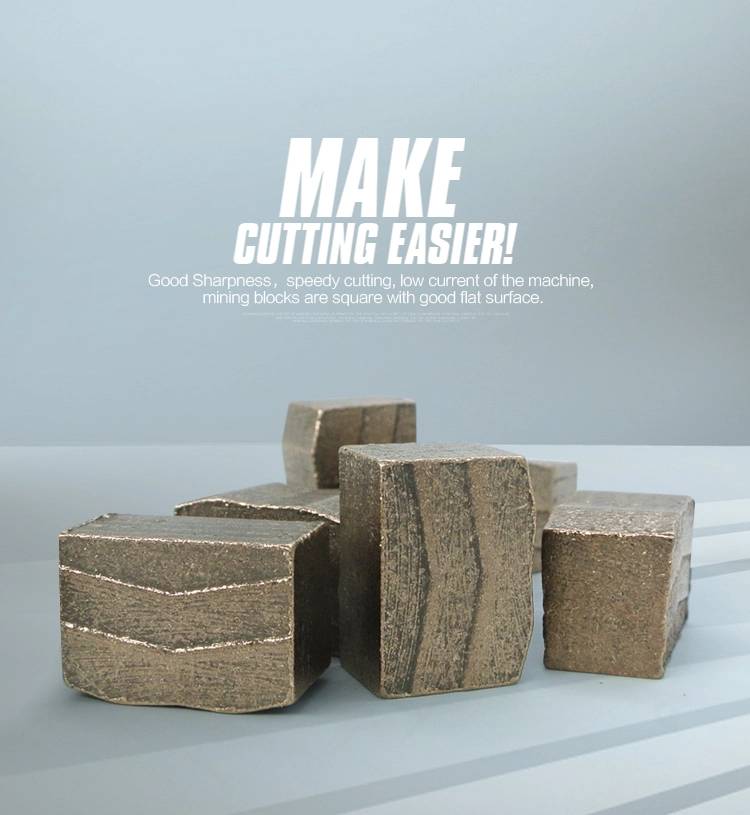
The Matrix Must Wear at the Right Rate
A diamond grain cannot cut effectively if it remains buried beneath the matrix. After a segment is sintered, a dressing or sharpening process is commonly used to expose the abrasive grains so they can begin cutting.
As the segment works, the matrix gradually wears and reveals fresh diamond grains. Ideally, this wear proceeds at a rate that keeps the diamonds exposed and supported for as long as possible.
If the matrix wears too quickly, diamond grains may lose their support and fall out prematurely. If it wears too slowly, the diamonds may remain insufficiently exposed, reducing cutting efficiency and potentially causing the tool to rub rather than cut effectively.
The relationship between diamond wear resistance and matrix wear resistance is therefore critical. The matrix must support the abrasive grains without preventing them from doing their job. The appropriate balance depends on the stone being processed, the cutting conditions, and the characteristics of the diamond abrasive.
Heat Transfer Helps Protect the Abrasive
Cutting stone generates heat through friction and the interaction between the diamond grains and the workpiece. If that heat accumulates around the cutting edge, the diamond abrasive and bonding structure may deteriorate more rapidly.
The metal matrix provides a path for heat to travel away from the working area and into the segment body and blade core. When combined with an appropriate cooling-water supply, this helps manage the temperature generated during cutting.
Diamond itself has high thermal conductivity, but the heat flow through a finished segment depends on the entire structure, including the metal matrix, grain-to-matrix interfaces, and operating conditions. It would therefore be misleading to attribute heat dissipation to the matrix alone.
For wet stone cutting, suitable water flow remains essential. A well-designed matrix supports heat transfer, but it cannot replace proper cooling or compensate for unsuitable operating parameters.
Distributing Impact and Cutting Loads
During sawing, diamond grains encounter changing loads as they engage with the stone. These forces include cutting resistance, friction, and repeated impacts. The matrix provides structural support around the grains and helps distribute these loads through the segment.
Without adequate support, individual grains may experience excessive local stress, increasing the risk of premature pullout or damage. A matrix with suitable strength and toughness can help the segment withstand the demands of cutting while allowing controlled wear to expose fresh abrasives.
The balance is not simply a matter of making the matrix as hard as possible. Excessive hardness or an unsuitable wear rate can hinder diamond exposure, while insufficient strength can reduce grain retention. Matrix design must balance hardness, toughness, wear behavior, and compatibility with the workpiece and cutting conditions.
Why Matrix Quality Matters as Much as Diamond Quality
Two diamond segments containing similar abrasive grades can perform very differently if their matrix formulations or manufacturing controls differ. Diamond concentration and quality matter, but so do grain distribution, bond strength, matrix wear rate, heat transfer, and the segment’s ability to withstand cutting loads.
For manufacturers, these factors need to be considered together when selecting metal powders and setting sintering parameters. For buyers, cutting speed and service life should be evaluated alongside the stone type, blade specifications, machine condition, and cooling method.
A well-matched matrix does more than hold diamond grains. It keeps them working, exposes fresh cutting points at an appropriate rate, helps move heat away from the cutting zone, and supports the grains under load. These functions work together to determine how efficiently a diamond segment cuts and how much of its abrasive material is used before the segment reaches the end of its service life.